

close
Choose Your Site
Global
Social Media
Views: 0 Author: Site Editor Publish Time: 2026-05-28 Origin: Site


Selecting your gear is a high-stakes decision. Your hand comfort directly impacts throttle control over long distances. Meanwhile, adequate protection dictates post-crash outcomes and injury severity. Unfortunately, relying on aesthetics leaves riders completely vulnerable on the road. Vague marketing copy promising "impact resistance" fails when rubber leaves the pavement. True evaluation requires a deeper look at the data. You must match technical specifications, material properties, and specific fitment behaviors to the exact realities of your riding style. This guide provides a verifiable, standard-driven framework for making that choice. We will help you filter out non-protective fashion items masquerading as safety equipment. You will discover exactly how to shortlist and select the right motorcycle gloves. Whether you carve canyons or commute through city traffic, you will gain actionable insights.
Safety Base-Lines: Look for CE EN 13594:2015 certification; Level 1 provides 4-second abrasion resistance, while Level 2 provides 8 seconds.
The Palm Slider Imperative: Hard palm sliders are non-negotiable for highway speeds to prevent wrist/arm fractures during a slide.
The 5% Sizing Rule: Leather stretches approximately 5% during break-in (do not size up), whereas textile materials remain static (size up if between sizes).
Style Dictates Structure: Gauntlet vs. short-cuff decisions should be driven entirely by riding environment (e.g., track days vs. urban commuting), not looks.
Evaluating safety requires objective data. You cannot rely on brand promises alone. Establish verifiable metrics to filter out non-protective fashion gear. Always check for CE or UKCA certifications before looking at aesthetic features. The defining European safety standard is EN 13594:2015. It tests how gear withstands abrasion, tearing, and direct blunt force impacts.
We categorize this safety standard into two distinct levels. Level 1 offers standard daily protection for moderate speeds. Level 2 provides heavy-duty track-level safety for highway and aggressive riding. Understanding the numerical differences between these levels empowers you to make informed decisions.
Testing Metric (EN 13594:2015) | Level 1 Certification | Level 2 Certification |
|---|---|---|
Impact Abrasion Resistance | Minimum 4 seconds | Minimum 8 seconds |
Seam Strength Pull Threshold | 6 N/mm | 10 N/mm |
Cuff Length Overlap | ≥ 15mm | ≥ 50mm |
Safety standards also mandate critical armor placement across specific impact zones. Knuckle protection addresses an unavoidable human instinct. When falling, we naturally extend our hands to catch ourselves. High-density inserts absorb this primary impact energy. Common materials include D3O molecular armor, rigid carbon fiber, and thermoplastic polyurethane (TPU). Each material prevents shattered knuckles during initial ground contact.
However, knuckle armor alone is simply not enough. Palm sliders remain an absolute necessity for street riding. Explain the biomechanics of a crash to understand why. Without a hard slider, leather or textile grips the asphalt instantly. Your body keeps moving forward at highway speeds. This scenario transfers immense rotational energy directly into your wrist joint. The result is often a broken scaphoid or fractured forearm. Hard palm sliders change this biomechanical reality. They allow your hand to slide smoothly over the pavement. This crucial sliding action prevents catastrophic energy transfer.
Finding the best motorcycle gloves means mapping product categories to actual use-case scenarios. A premium racing gauntlet becomes a sweaty burden in urban stop-and-go traffic. Conversely, an urban mesh commuter offers zero survival value on a race track. Tailor your selection to your precise environment.
High-speed environments demand zero compromises. Your primary success criteria include maximum abrasion resistance, full wrist coverage, and superior joint stabilization. Track riders face sustained slides across highly abrasive tarmac.
Look for specific structural features when shopping this category. Pinky-bridge connections prevent the vulnerable small finger from rolling and snapping. You need extended cuff lengths wrapping over your leather suit. Level 2 certification requires a minimum 50mm cuff extension. Prioritize heavy cowhide or kangaroo leather construction for ultimate durability.
Long-haul riders face changing climates and rapid elevation shifts. Your success criteria focus on multi-climate adaptability, vibration dampening, and fatigue reduction. Comfort over a ten-hour riding day equates directly to safety.
Adventure models incorporate complex material engineering. Look for dual-chamber systems. These allow you to insert your hand into a waterproof chamber for rain, or a tactile grip chamber for dry control. Prioritize authentic Gore-Tex membranes over generic waterproof liners. Combine robust knuckle armor with a breathable textile chassis to handle varying temperatures.
City riders battle stoplights, slow speeds, and dense traffic. Your success criteria prioritize high dexterity, easy donning and doffing, and low physical bulk. You need maximum ventilation to survive summer commutes.
Short-cuff designs dominate this space. They should measure roughly 15mm past the wrist bone. Look for touchscreen compatibility to easily operate GPS devices at stoplights. Hybrid construction blends leather palms for slide protection and mesh backing for traffic cooling.
Trail riders face vastly different hazards compared to street riders. Your success criteria include maximum ventilation and highly sensitive tactile feedback. You need to manipulate levers rapidly while dodging tree branches.
Heed this crucial risk warning regarding off-road equipment. Manufacturers design these specifically for non-paved impacts and soft dirt. Dirt models do not offer sufficient abrasion resistance for highway or street sliding. Never substitute a motocross model for your daily street commute.
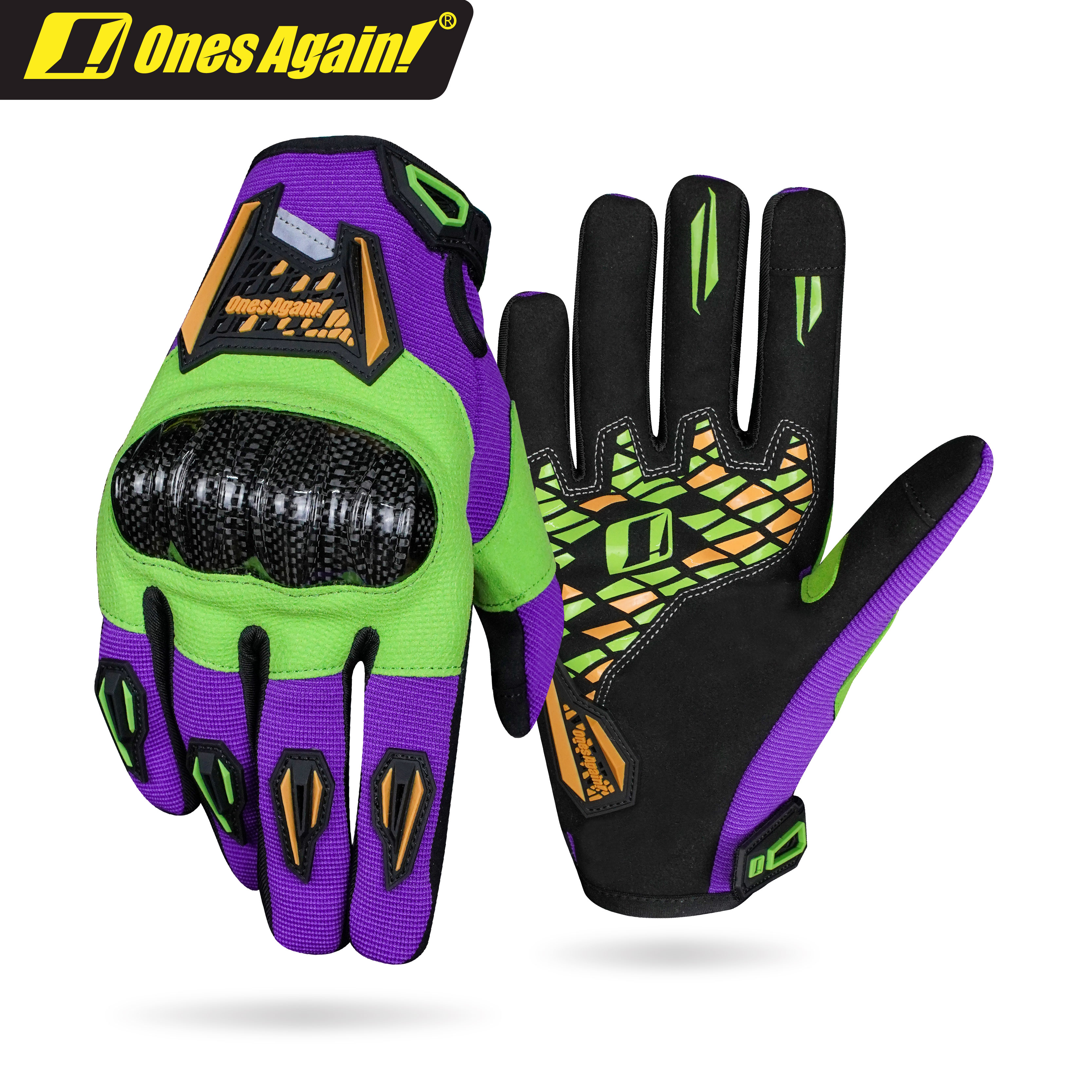
Assessing durability versus weather resistance requires understanding raw materials. Every material presents specific performance trade-offs. You must balance tactile feedback against ultimate slide protection.
Leather remains the undisputed champion of pure abrasion resistance. However, not all animal hides perform identically on the road.
Cowhide: This provides the highest durability and abrasion resistance. It forms the backbone of track gear. Expect a significantly longer break-in period before it feels comfortable.
Goatskin: This hide is naturally thinner, offering much better tactile feedback on the throttle. It contains natural lanolin. This compound makes goatskin inherently more water-resistant than cowhide.
Sheepskin: This material feels extremely supple right out of the box. It offers luxurious comfort. However, it ranks much lower on the abrasion-resistance hierarchy.
Modern chemistry transformed riding gear. Synthetics offer advantages impossible to achieve with natural hides.
Kevlar and Aramid Fibers: These aerospace materials deliver extreme heat and tear resistance. Manufacturers often use them for internal stitching. They also appear as reinforced palm overlays.
Mesh and Nylon: These provide high airflow and drastically lower manufacturing costs. They excel in summer heat. However, they possess inherently lower sliding friction protection. They must be reinforced with leather impact zones.
The final verdict comes down to behavior over time. Leather conforms precisely to the rider's hand shape. It requires patience but yields a bespoke fit. Textiles offer better all-weather reliability. They provide excellent out-of-the-box comfort without any painful break-in period.
Preventing critical errors in online sizing requires patience. A poor fit leads directly to rapid hand fatigue. It also compromises the structural integrity of safety seams during a crash.
Materials react differently to sweat, heat, and tension. You must apply the stretch rule accurately. Leather breaks in and stretches up to 5% over the first month of riding. Therefore, buying leather options slightly snug is absolutely necessary. They will relax to fit you perfectly.
Textile materials behave entirely differently. Synthetic fibers will not stretch. They remain static throughout their entire lifecycle. If you measure between sizes when buying textile gear, always size up.
Manufacturers design products around specific demographic hand molds. European fits tend to run very snug. They feature an aggressive, curved pre-shape designed for sportbikes. American fits feel noticeably relaxed. They accommodate wider palm structures and thicker fingers.
Never rely on the open-hand test. Trying on gear with flat palms tells you nothing about riding comfort. You must validate the fit dynamically.
Grip an imaginary throttle. Better yet, grip your actual motorcycle handlebar. Pay attention to the fingertips. They should barely touch the inside end of the material without bunching up. Examine the webbing between your fingers. It should not pull tightly away from your skin. If closing your fist requires noticeable forearm effort, the size is entirely too small.
Finalizing your purchase criteria brings you closer to the perfect choice. You must look past the branding and focus on functional engineering.
Adopt the Two-Pair Strategy: The perfect all-season product is a myth. No single item can conquer freezing rain and 100-degree heat. Shortlist one highly ventilated summer mesh hybrid. Then, select one insulated, waterproof pair specifically for the cold shoulder seasons.
Demand Fatigue-Reduction Features: Touring requires thousands of clutch pulls. Look for integrated stretch zones. Manufacturers build these accordion-style panels directly over fingers and knuckles. They drastically reduce the energy required to grip levers over long miles.
Verify the Closure Systems: Premium armor means nothing if the gear flies off during an impact. Ensure robust wrist strapping exists. Velcro or hook-and-loop systems must lock down firmly. You should not be able to pull it off your hand when tightened. This remains a standard failure point in cheap online alternatives.
Finding the right protection demands objective evaluation. You now possess a standard-driven framework to guide your final decision. By prioritizing verifiable safety data over aesthetic appeal, you protect your hands against devastating injuries.
Prioritize CE-rated seams and hard palm sliders to survive asphalt slides.
Match the cuff length directly to your specific riding environment and jacket style.
Apply the 5% stretch rule to leather materials for a perfect, long-term fit.
Measure your palm width precisely, excluding the thumb, before consulting any brand charts.
Adjust your size selection based on snug European versus relaxed American structural cuts.
Begin your shortlist immediately. Stop relying on unverified marketing claims. Protect your hands with equipment built for the exact realities of your ride.
A: Yes. When you fall, human instinct makes you extend your hands. Without a hard slider, the material grips the asphalt. Your body keeps moving forward. This transfers immense rotational force directly into your wrist, often breaking arm bones. Palm sliders let your hands glide safely over the pavement.
A: Signs include restricted blood flow, cold hands, and finger numbness. When you grip the throttle, your fingertips should not smash painfully against the ends. The webbing between the fingers should not pull tightly away from your skin. If closing your fist requires significant physical effort, they are too tight.
A: Base this entirely on your environment. Choose gauntlets for track days, highway touring, and cold weather. They overlap your jacket to prevent wind intrusion and offer wrist bone protection. Choose short-cuffs for low-speed urban commuting in hot weather. They provide high dexterity and quick on-and-off convenience.
A: Not necessarily. Leather remains the top choice for pure track abrasion resistance. However, modern textiles often outshine leather for touring and commuting. Materials like Kevlar provide excellent tear strength. Gore-Tex membranes offer superior waterproofing. Often, the ideal choice is a hybrid utilizing leather for impact zones and textiles for breathability.
https://iqrorwxhkoqplj5p-static.micyjz.com/static/assets/images/transparent.png?1779355328542 Choose the best motorcycle gloves with our expert guide. Learn about CE safety standards, materials, palm sliders, and finding the perfect fit.


